Targeting the Root Cause of Hair Thinning

Oral finasteride is one of the most powerful medical hair loss therapies, addressing hair loss where it begins, at the hormonal level, rather than simply managing its visible effects. At the Canadian Hair Transplant Centre, all finasteride prescriptions are overseen by our founder, Dr. Anil Sharma, to ensure a medically-backed, individualised approach.

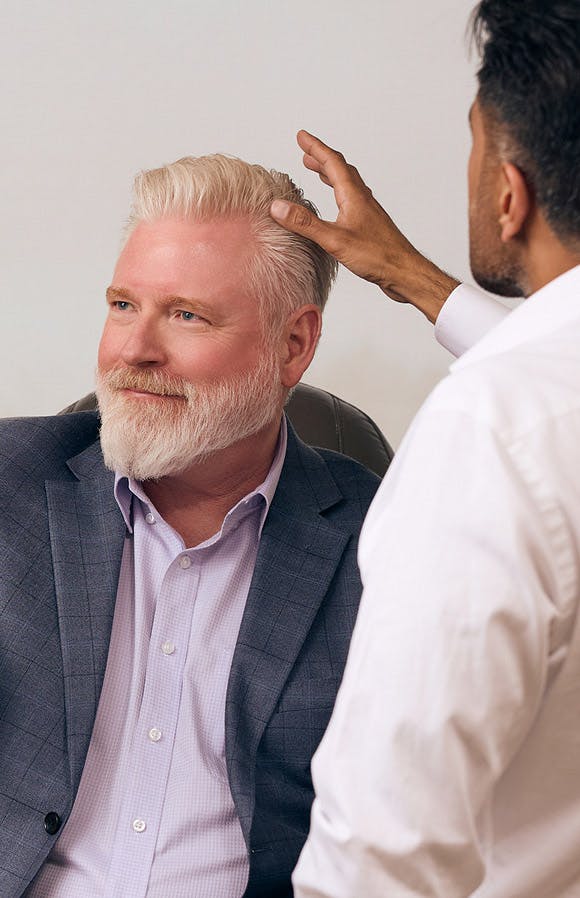
patient and doctor looking at a clipboard

What Is Finasteride?

Oral finasteride is a prescription medication taken once daily that inhibits the type II 5-alpha-reductase enzyme, which converts testosterone into dihydrotestosterone (DHT). Because DHT is the primary hormonal driver of androgenetic hair loss, reducing its levels slows the miniaturisation process that affects follicles in DHT-sensitive areas of the scalp. For eligible patients, finasteride can meaningfully slow or halt progression and, in many cases, support measurable regrowth over time.


Doctor media

Why Choose the Canadian Hair Transplant Centre?

Medical hair loss therapy at the Canadian Hair Transplant Centre is not a separate service appended to a surgical practice. Here, prescription therapy is a fully integrated part of a hair restoration system managed by a team of nurse practitioners who understand its role within the broader treatment journey.

The Canadian Hair Transplant Centre is the only practice in Alberta dedicated exclusively to hair restoration, with a CPSA-approved clinic. Our nurse practitioners work within protocols established by the International Society of Hair Restoration Surgery (ISHRS), with treatment decisions grounded in trichoscopic assessment, scalp evaluation, and a thorough review of your medical history. 

Doctor background

What to Expect From Your Oral Finasteride Treatment in Edmonton

How Finasteride Works in the Scalp

Finasteride targets the type II 5-alpha-reductase enzyme found in hair follicle cells, specifically in the dermal papilla region where DHT-related miniaturisation occurs. By blocking this enzyme, finasteride reduces local DHT levels and interrupts the hormonal signal that causes follicles to progressively shrink and produce finer, shorter hairs. The medication is taken as a 1 mg tablet once daily and must be used consistently to maintain its effect on DHT suppression.

Clinically-Backed Treatments

Finasteride is one of two medications with robust clinical evidence supporting its use in androgenetic alopecia. Large-scale studies support the following outcomes with consistent use over 24 months:

  • 83% of users maintained their baseline follicle count, meaning progression was effectively halted
  • 64% of users experienced measurable, clinically documented regrowth in treated areas
  • Improvements in hair shaft diameter and overall density were observed in the majority of patients who responded to treatment
  • Effects are maintained with continued use and generally begin to reverse within 12 months of discontinuation

Tailoring Your Treatment

Before prescribing oral finasteride, our founder, Dr. Sharma, and our team of nurse practitioners will conduct a full assessment to confirm your candidacy. This includes a review of your medical history, current medications, and any contraindications. Finasteride is not appropriate for women of childbearing age due to its hormonal mechanisms, and it requires careful consideration in younger male patients who may have concerns about the risk profile. During your consultation, we’ll discuss the following with you:

  • Current stage of hair loss using the Norwood-Hamilton classification
  • Family history and anticipated rate of future progression
  • Any prior use of finasteride or alternative DHT-blocking medications
  • Individual risk-benefit profile, including a frank discussion of known side effects

Monitoring and Integration With Other Treatments

Oral finasteride is most effective as part of a broader treatment plan that may include topical treatments, regenerative therapies, or surgical hair restoration, depending on your stage of loss. Our licensed nurses will schedule follow-up assessments at three, six, and 12 months to evaluate your response to treatment, monitor for any side effects, and adjust your plan as needed. Finasteride is frequently recommended both before and after hair transplant surgery to protect non-transplanted native hair from continued DHT-driven progression.

Schedule A Consultation

Contact us media

Dosing Information and Side Effects

Oral finasteride is taken as a once-daily tablet and requires no procedure, incision, or downtime. Most patients begin treatment without any noticeable side effects, though a small number may experience a mild shedding period in the first six to eight weeks, as the hair cycle adjusts to reduced DHT levels. If any side effects are noticed, our nurses are available at our clinic for check-ins to review your options.

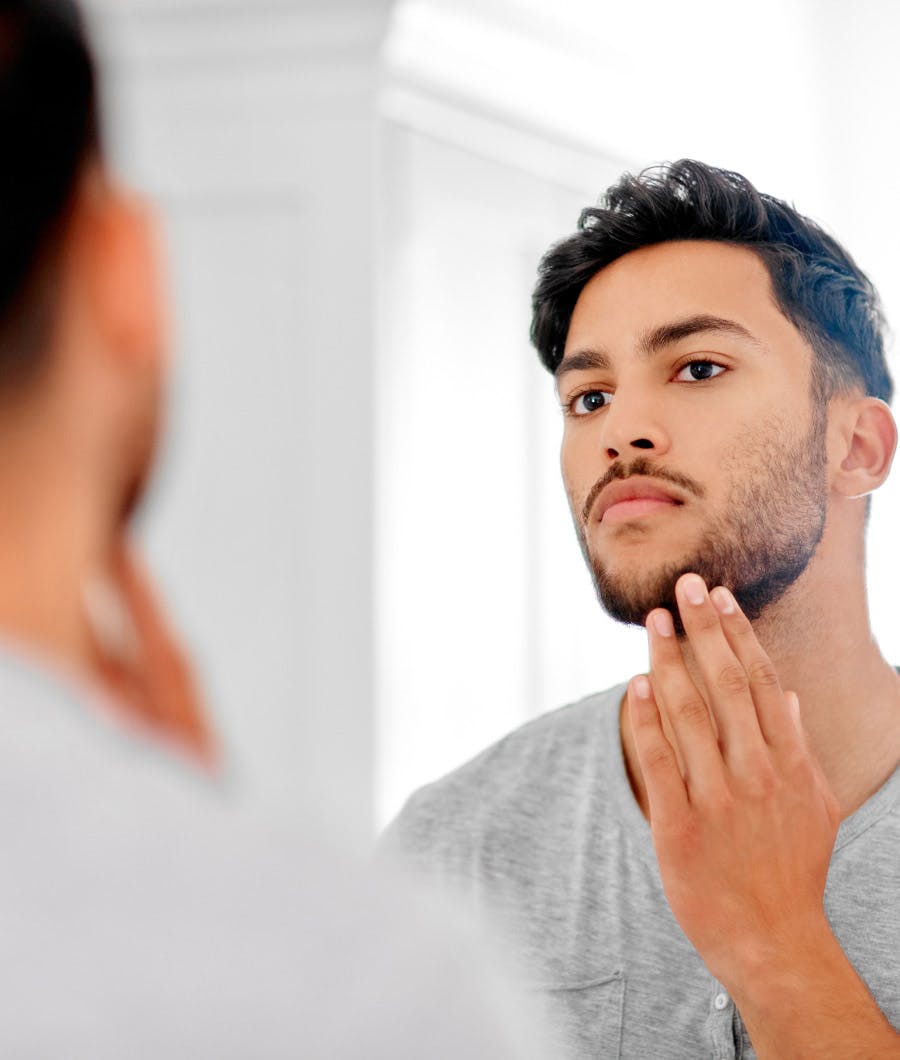
Man touching his beard

Your Follow-Up Process

After starting oral finasteride, our team of nurse practitioners will provide you with clear guidance on what to expect and how to monitor your progress. Your follow-up plan may include the following:

  • Scheduled review appointments at three, six, and 12 months
  • Clinical photography to document visible changes in coverage and hair shaft quality
  • Monitoring for any reported side effects and a review of your ongoing suitability
  • Trichoscopy assessments to measure changes in follicular density
  • Reassessment of your broader treatment plan as your response to medication becomes clear
  • Guidance on whether to continue finasteride as a standalone therapy or integrate it with additional treatments

Our team will remain accessible between appointments if you have questions or concerns during the early months of treatment.

Gradual, Powerful Results

Most patients notice a reduction in daily shedding within the first three to four months of consistent finasteride use, with measurable improvements in density and hair shaft quality becoming visible within the year. Peak results are generally observed at the 12- to 18-month mark, and the benefits of treatment are maintained only with continued, uninterrupted daily use.

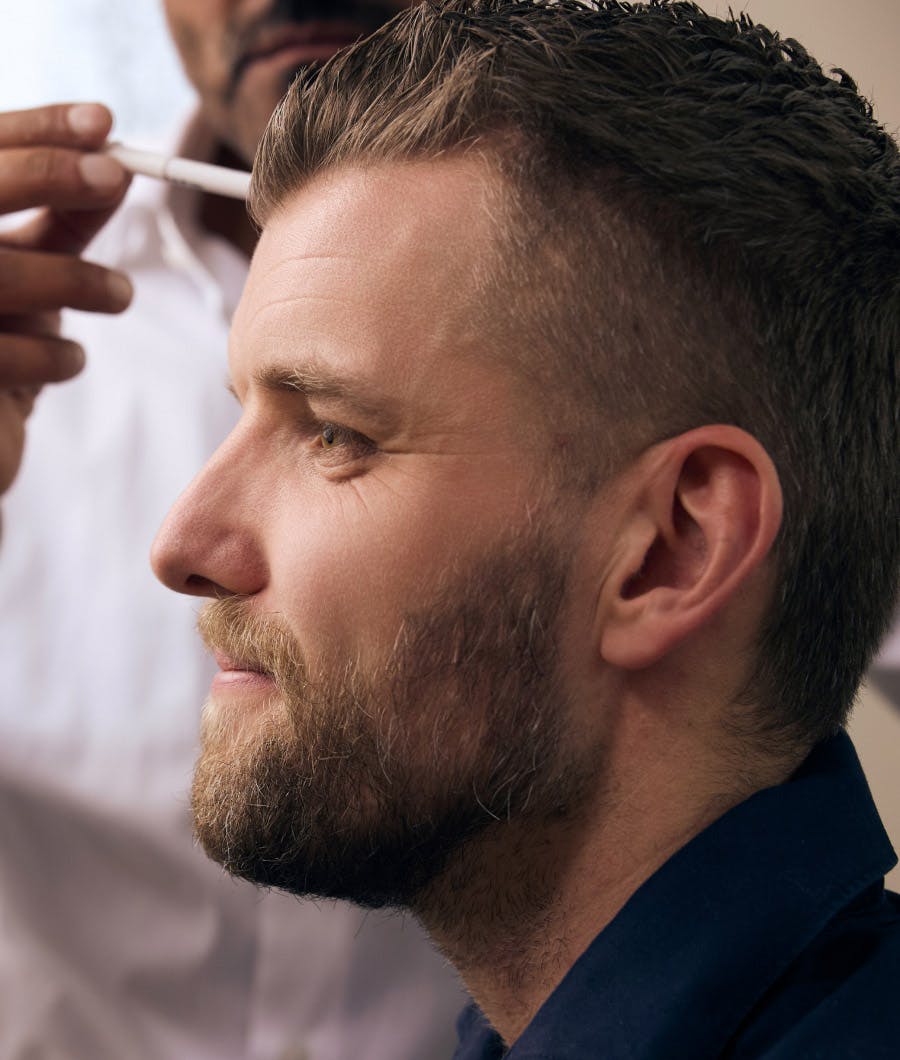
A man's side profile

Finasteride (Oral) Frequently Asked Questions

How long do I need to take finasteride before I can assess whether it is working?

A minimum of 12 months of consistent daily use is typically required before an accurate assessment of treatment response can be made. Results build gradually, and assessments made too early may underestimate the medication's long-term effectiveness.

What are the known side effects of oral finasteride?

Sexual side effects, including reduced libido, erectile dysfunction, and decreased ejaculate volume, are reported in approximately 2-4% of users. Mood changes are reported in less than 1% of users. Our team of nurse practitioners will discuss your individual risk profile before prescribing and will monitor for side effects throughout your treatment.

Can I take oral finasteride alongside other hair loss treatments?

Yes. Finasteride is commonly combined with topical minoxidil, platelet-rich plasma (PRP) therapy, or microneedling as part of a broader treatment protocol. Combining DHT suppression with therapies that support follicle activity and scalp circulation can improve overall outcomes for patients in the earlier stages of androgenetic alopecia.

Will my hair loss return if I stop taking finasteride?

Yes. The benefits of finasteride are dependent on continued use. When the medication is discontinued, DHT levels return to baseline, and the miniaturisation process typically resumes. Most patients who stop treatment notice a gradual return of pre-treatment shedding within 12 months of stopping the medication.

Schedule Your Surgical Consultation

Hair transplant surgery requires careful evaluation and planning. Schedule a consultation to determine if you are a candidate for FUE or FUT procedures. The assessment includes donor evaluation, recipient area analysis, and discussion of realistic outcomes based on your individual characteristics. For medical therapy options, consult with your primary physician or dermatologist.

Contact us media Contact us media
Accessibility: If you are vision-impaired or have some other disability covered by the Accessible Canada Act, provincial accessibility or human rights legislation, or a similar law, and you wish to discuss potential accommodations related to using this website, please contact our Accessibility Manager at (780) 476-7970.
Book Consultation