Delivering Top-Tier Precision Around the Full Scalp

Across the entire scalp, the crown is the second most common area our founder, Dr. Anil Sharma, treats for hair loss at the Canadian Hair Transplant Centre. It’s also one of the most technically demanding, requiring a long-term surgical strategy that accounts for future progression. Every crown restoration is planned with meticulous attention to detail to ensure organic-looking results today and ten years from now.

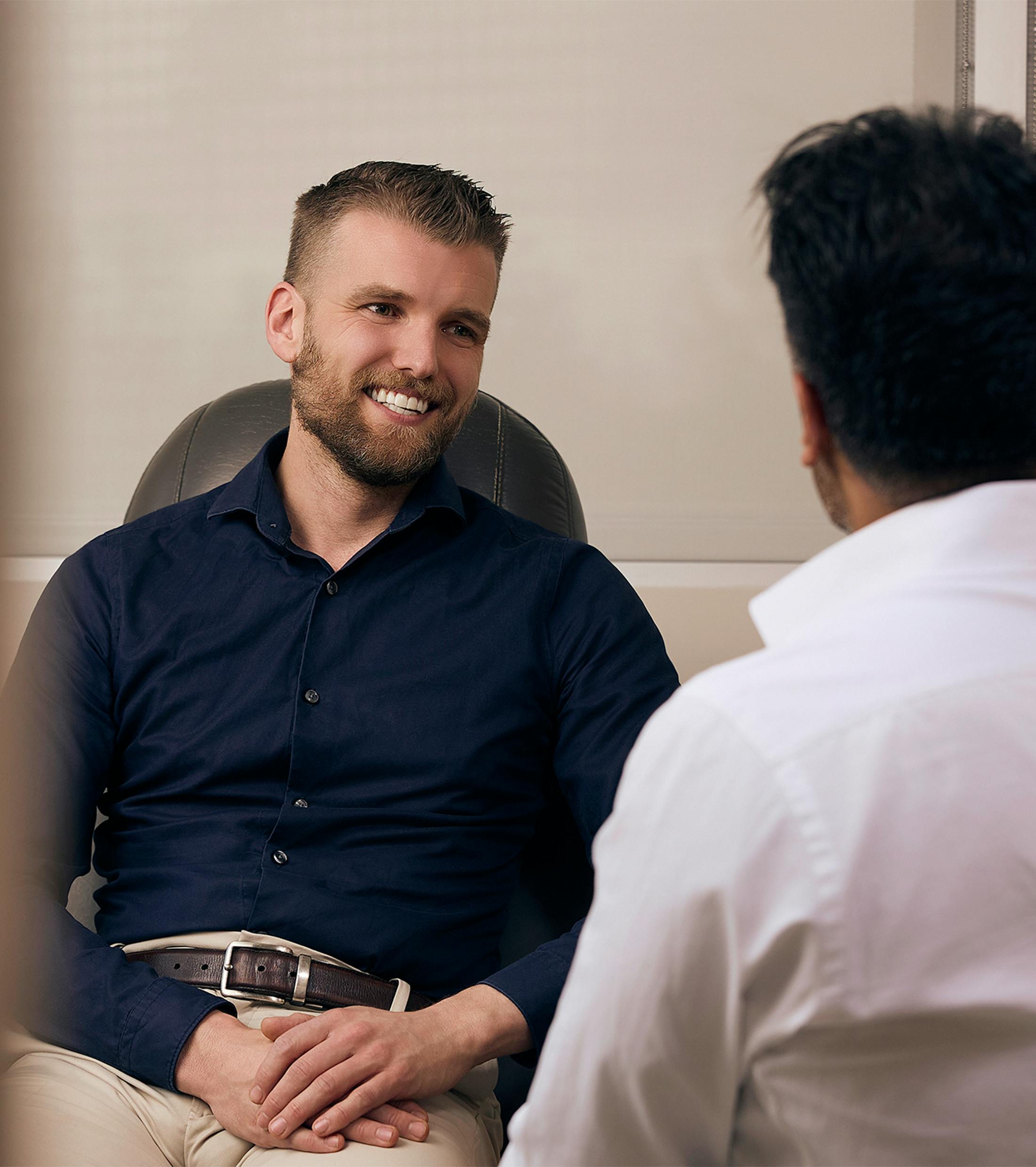
patient smiling at a doctor

What Are Crown Hair Transplants?

A crown hair transplant is a surgical hair restoration procedure that relocates DHT-resistant follicles from the donor zone to the vertex of the scalp, where androgenetic alopecia most commonly presents. Approximately 92% of vertex loss is attributed to androgenetic alopecia in both men and women, requiring a more medically-driven approach. Here, we focus on addressing crown hair loss early to significantly improve coverage and density and combat progressive thinning.
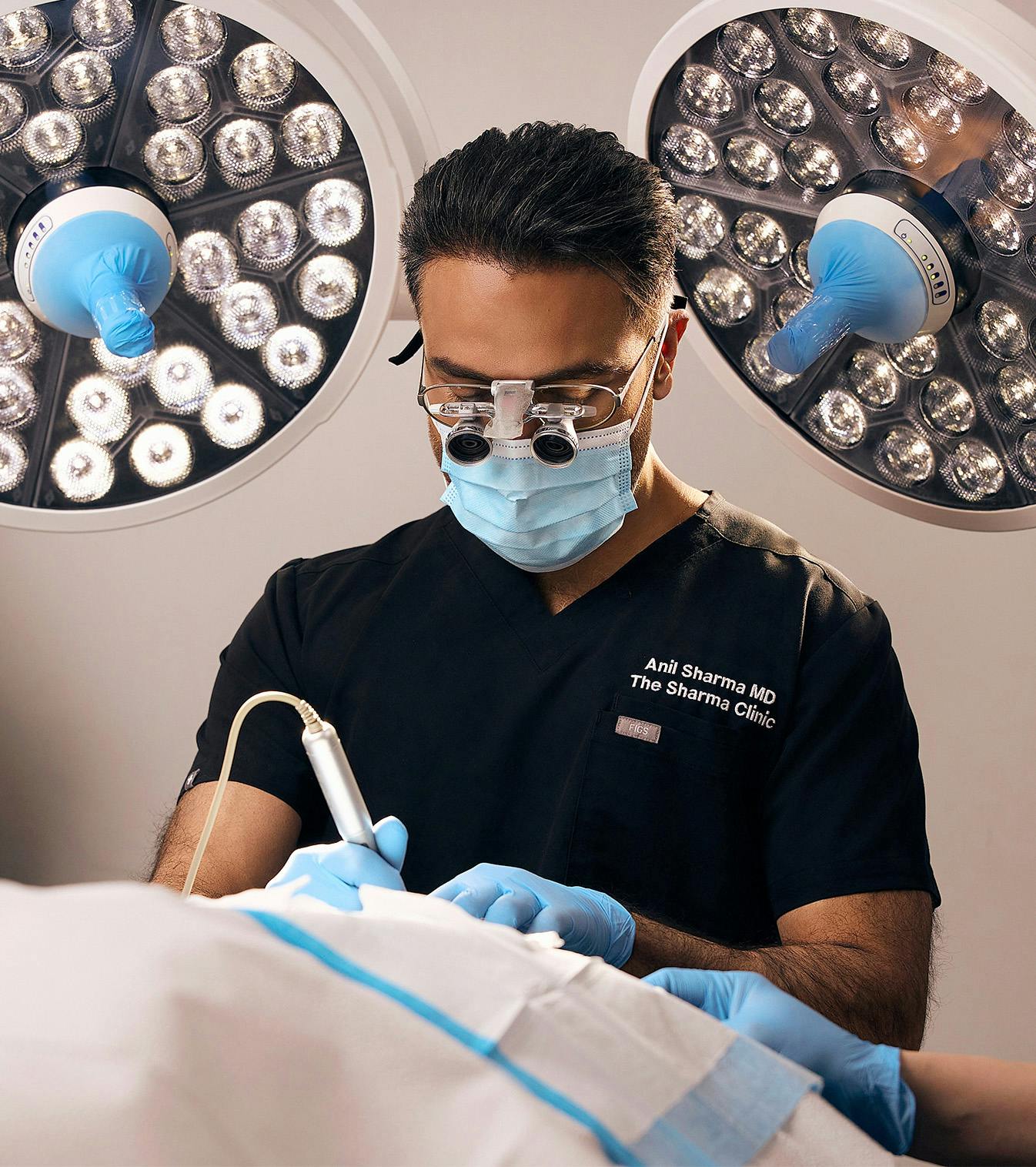

Doctor media

Why Choose the Canadian Hair Transplant Centre?

Crown restoration requires highly technical execution and a physician who understands that the vertex is a dynamic area where hair loss continues to evolve. Dr. Sharma, who holds an MD and MB ChB from the University of Glasgow, builds that reality into every surgical plan from the outset, crafting customised surgical plans that work with your natural loss patterns. He’s performed over 1,000 successful hair restoration procedures across Alberta, England, and Scotland throughout his 15+ years of dedicated hair restoration experience. The Canadian Hair Transplant Centre operates as a CPSA-approved Non-Hospital Surgical Facility, meeting the same rigorous standards of facility management, sterilisation, and patient safety in every case. All of our procedures follow rigorous standards set by the International Society of Hair Restoration Surgery (ISHRS).

Doctor background

What to Expect From Your Crown Hair Transplant in Edmonton

TrichoScan Assessment and Long-Term Surgical Planning

During your initial consultation, Dr. Sharma will use advanced TrichoScan imaging to map your donor density and assess your lifetime graft availability. Crown restoration planning differs from frontal hairline work because the vertex lacks a fixed boundary, underscoring the importance of achieving a cohesive result.

Dr. Sharma will factor in your current Norwood classification, your family history of hair loss, and the projected trajectory of future recession before determining how many grafts can be allocated to the crown without compromising your donor supply.

Graft Extraction and Preservation

Dr. Sharma will extract all grafts using 0.6-0.7 mm manual punches under surgical magnification, with no motorised or robotic devices used at any point. Once harvested, the grafts will be stored in HypoThermosol and an ATP solution at 2-4℃ using a first-in, first-out system to preserve graft integrity. Every graft will undergo stereomicroscopic inspection before being approved for placement, with the following criteria applied to every follicle:

  • Each graft will be assessed for intact root and bulge integrity to confirm regenerative viability
  • Damaged or incomplete grafts will be excluded from implantation
  • Single-hair grafts will be reserved for the outer perimeter of the crown to avoid an artificial-looking dense edge
  • Multi-hair grafts will be directed toward the central vertex zone to build visible density efficiently

Recipient Site Creation

During surgery, Dr. Sharma will manually create all recipient sites using custom blades sized to match each individual graft. His crown placement typically follows a spiral or radial pattern that replicates the natural swirl of vertex hair growth, a detail that generalist practices often overlook.

Before making any transplants, he’ll create test incisions to confirm the correct blade size and incision depth, using epinephrine to firm the tissue and reduce bleeding during site creation.

Graft Placement and Density Distribution

Dr. Sharman will hand-place each graft under surgical magnification to match the angulation and rotational direction of the surrounding hair’s natural growth pattern. Because the crown presents a circular area with a central growth point, the direction of every incision must change progressively as placement moves outward from the whorl. Dr. Sharma distributes density across the crown using the following approach:

  • The central whorl region will receive careful directional planning to establish the correct rotational anchor point for the entire zone
  • Mid-crown grafts will be placed to create a graduated density that reads as natural rather than artificially uniform
  • Peripheral grafts will be spaced conservatively to preserve a soft, natural outer boundary
  • The overall graft count will be calibrated against the available donor supply and the likelihood of future sessions being required

Testimonials

My biggest insecurity is now gone!

Over a year in and I am so pleased with how my hair came in. My biggest insecurity is now gone! Dr. Sharma has such a great and caring team!

Destiny Chase 5 out of 5 stars

I would highly recommend Dr Sharma.

The staff and the Sharma Clinic is always very welcoming and professional. Dr Sharma takes the time to listen to his patients and is very thorough with his procedures. The staff...

The staff and the Sharma Clinic is always very welcoming and professional. Dr Sharma takes the time to listen to his patients and is very thorough with his procedures. The staff always does a follow up call to make sure things have gone smoothly. I would highly recommend Dr Sharma.

Danusia Gale 5 out of 5 stars

The entire staff really care about your success.

The entire staff really care about your success. Dr Sharma is a fantastic surgeon with countless amazing transplant. Do not 2nd guess Call and book a appointment

Daryl Heisler 5 out of 5 stars

By far the best hair transplant doctor in Alberta, highly recommend.

By far the best hair transplant doctor in Alberta, highly recommend. The staff are top notch and very helpful.

Drew 5 out of 5 stars

Dr Sharma and his team were genuine

Dr Sharma and his team were genuine, professional and very courteous. If you’re thinking about getting any procedure done there I highly recommend it. It was the best money my p...

Dr Sharma and his team were genuine, professional and very courteous. If you’re thinking about getting any procedure done there I highly recommend it. It was the best money my partner ever spent.

Ryanne Dufour 5 out of 5 stars

Life changing. 10/10!!

Dr. Sharma and his staff were incredible from start to finish and the results exceeded expectations. Life changing. 10/10!!

Sean Zuk 5 out of 5 stars

My hairline looks better than it did at 18 years old and I couldn't be happier.

Got a FUE transplant with Dr. Sharma about 6 months ago and would honestly recommend him to anyone. Very thorough and helpful throughout the entire process, his team was on top ...

Got a FUE transplant with Dr. Sharma about 6 months ago and would honestly recommend him to anyone. Very thorough and helpful throughout the entire process, his team was on top of everything. Most importantly though, they simply did an incredible job on my transplant. My hairline looks better than it did at 18 years old and I couldn't be happier.

Colton Girard 5 out of 5 stars
Reviews media

Schedule A Consultation

Patient-First Recovery in Edmonton

Recovery after crown hair transplants in Edmonton typically involves mild swelling, tenderness, and dot-like scabbing at the vertex recipient area, which should resolve within two weeks. The crown can be more prone to prolonged swelling than the frontal zone due to its position, so head elevation and rest are particularly important during early recovery. We’ll provide you with a hydration spray containing HypoThermosol and saline to support healing and reduce the risk of infection at the recipient site. Most patients return to non-physical work and social gatherings five to eight days after their procedure. Strenuous activity should be avoided for at least one week to prevent sweating and scalp irritation at both the donor and recipient sites.

Older man with glasses

Your Post-Op Process

After your procedure, our team will provide you with a customised recovery plan tailored to your unique healing needs. Your plan may include guidance on the following:

  • Incision site care and cleaning protocols
  • Sun protection and exposure requirements
  • Scalp care guidelines
  • Hygiene and hair styling recommendations
  • Headwear guidance
  • Activity limitations
  • Side effects to monitor
  • Swelling and pain management strategies

Over the coming months, you’ll return to our offices for short follow-up visits with Dr. Sharma. There, he’ll check your healing progress, assess graft health, and discuss any additional thinning or loss you’ve noticed in the surrounding area.

Background media

Transforming Your Look

Most patients experience shedding during early recovery, which is a normal part of healing that makes way for permanent hair growth.

Your initial results typically become visible around the three-month mark, with approximately 70% of the final result apparent within one year.

Full density and maturity are generally reached after 18 months, at which point Dr. Sharma will assess the long-term sustainability of your results.

Crown Hair Transplant Frequently Asked Questions

Why does crown hair loss require a different long-term strategy than frontal hair loss?

The crown has no fixed anatomical boundary, meaning hair loss in this zone tends to expand outward over time. Dr. Sharma designs every crown restoration with future progression in mind, conserving sufficient donor follicles for additional procedures if loss extends beyond the initially treated area.

Is it better to treat crown hair loss early or wait until it stabilises?

Early treatment generally offers more options than late intervention. When the area of loss is still moderate, it can be addressed in a single session with a conservative graft count. Waiting until loss is extensive may require multiple sessions, a greater total graft investment, and more complex long-term planning.

Is a crown hair transplant painful?

No. Dr. Sharma and his team of technicians and nurses administer local anaesthesia to reduce pain and discomfort during surgery. Most patients find that over-the-counter pain medications are sufficient to manage soreness in the days following the procedure. Dr. Sharma personally follows up with every patient the day after surgery.

Will the surrounding untreated hair continue to thin after the procedure?

Yes. Transplanted follicles are permanent, but androgenetic alopecia is a progressive condition that will continue to affect non-transplanted hair over time. Dr. Sharma accounts for this in the surgical plan, and medical hair loss therapies are available through our Nurse Practitioner to help slow progression in surrounding areas.

Schedule Your Surgical Consultation

Hair transplant surgery requires careful evaluation and planning. Schedule a consultation to determine if you are a candidate for FUE or FUT procedures. The assessment includes donor evaluation, recipient area analysis, and discussion of realistic outcomes based on your individual characteristics. For medical therapy options, consult with your primary physician or dermatologist.

Contact us media Contact us media
Accessibility: If you are vision-impaired or have some other disability covered by the Accessible Canada Act, provincial accessibility or human rights legislation, or a similar law, and you wish to discuss potential accommodations related to using this website, please contact our Accessibility Manager at (780) 476-7970.
Book Consultation