Restore the Hairline, Refresh the Face

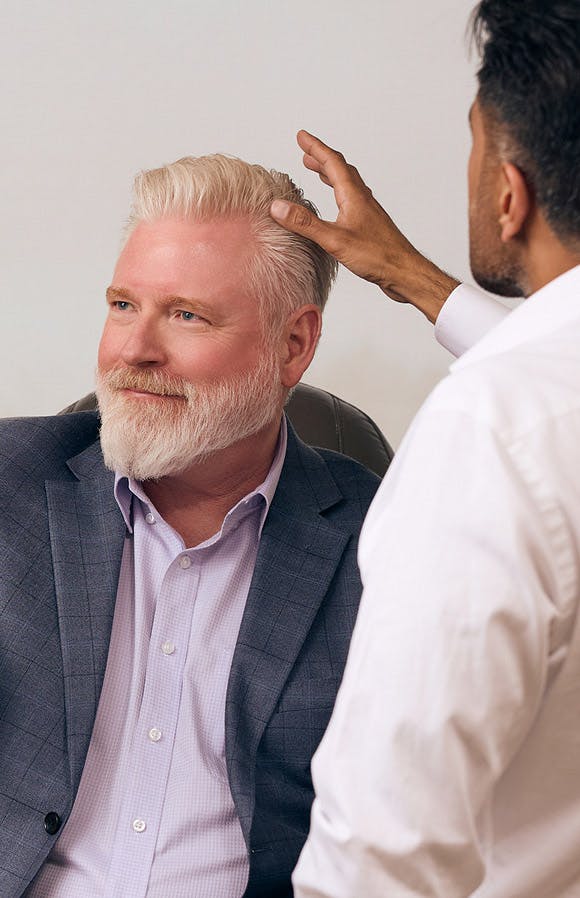
The frontal hairline is the most visible and scrutinised element of any hair restoration outcome, and a result that fails to account for future loss can look artificial within a few years. Our founder, Dr. Sharma, approaches every hairline transplant in Edmonton as both a clinical and a long-term aesthetic decision, crafting unique results that complement your facial structure.

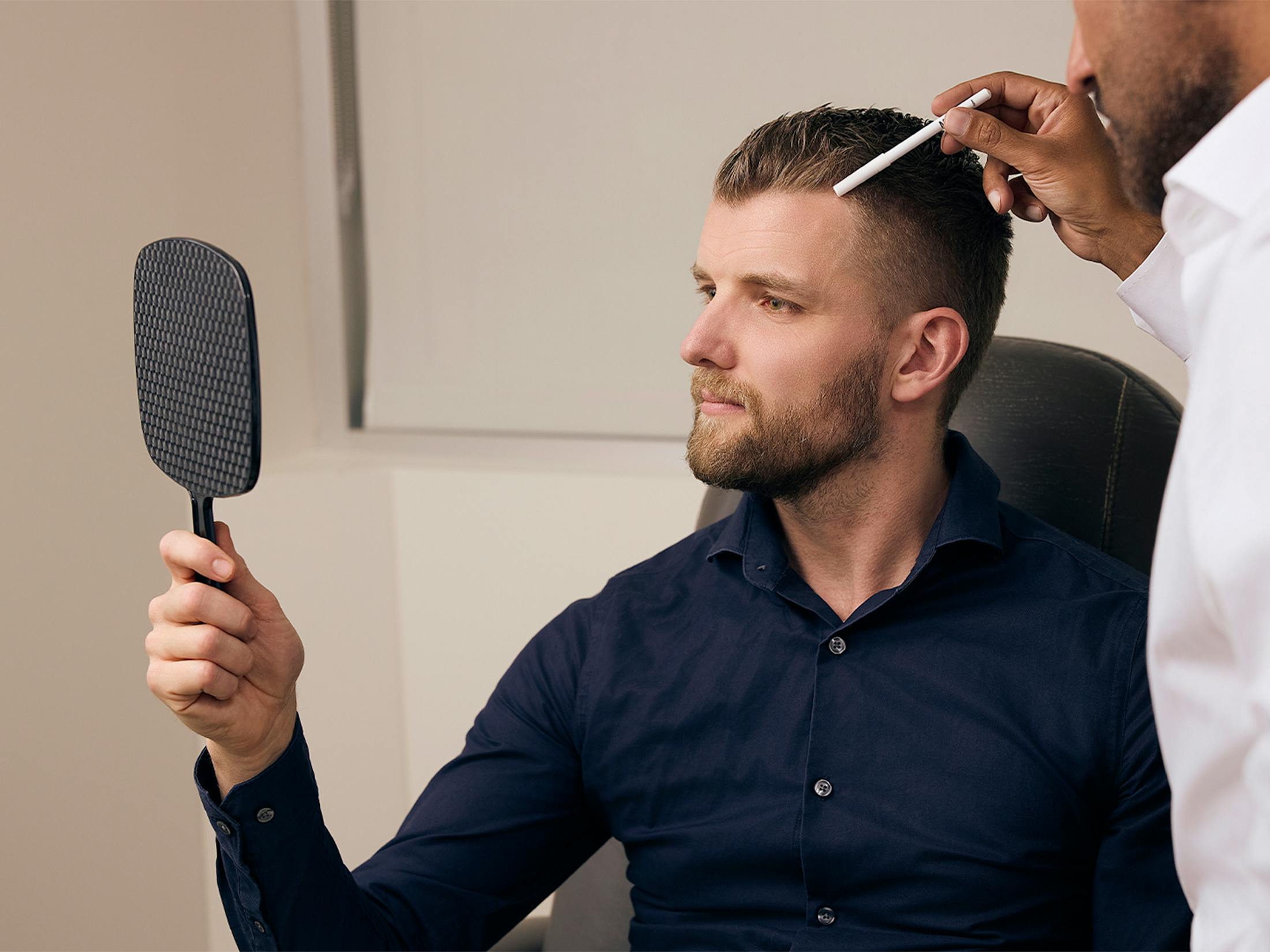
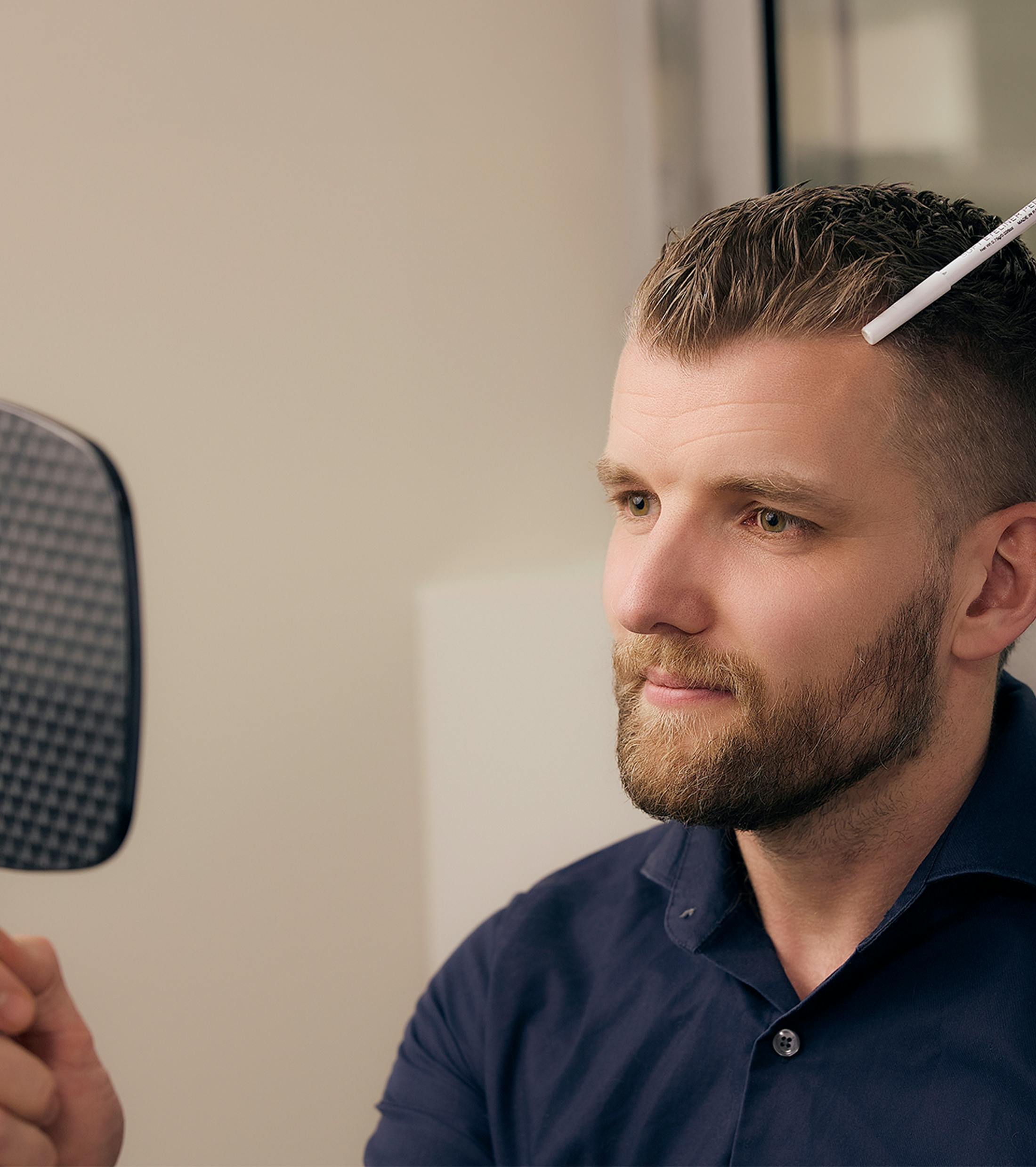
patient looking at his results in a hand mirror

What Is a Hairline Transplant?

A hairline transplant is a surgical procedure in which individual follicular units are placed along the frontal scalp to recreate the natural leading edge of the hairline. Because this zone is the most publicly visible area of the scalp, precision in placement, angulation, and design is critical to achieving a result that seamlessly integrates with the existing hair. Here, we focus on anatomical alignment to improve your facial framing and increase your confidence in personal and professional settings.

Doctor media

Why Choose the Canadian Hair Transplant Centre?

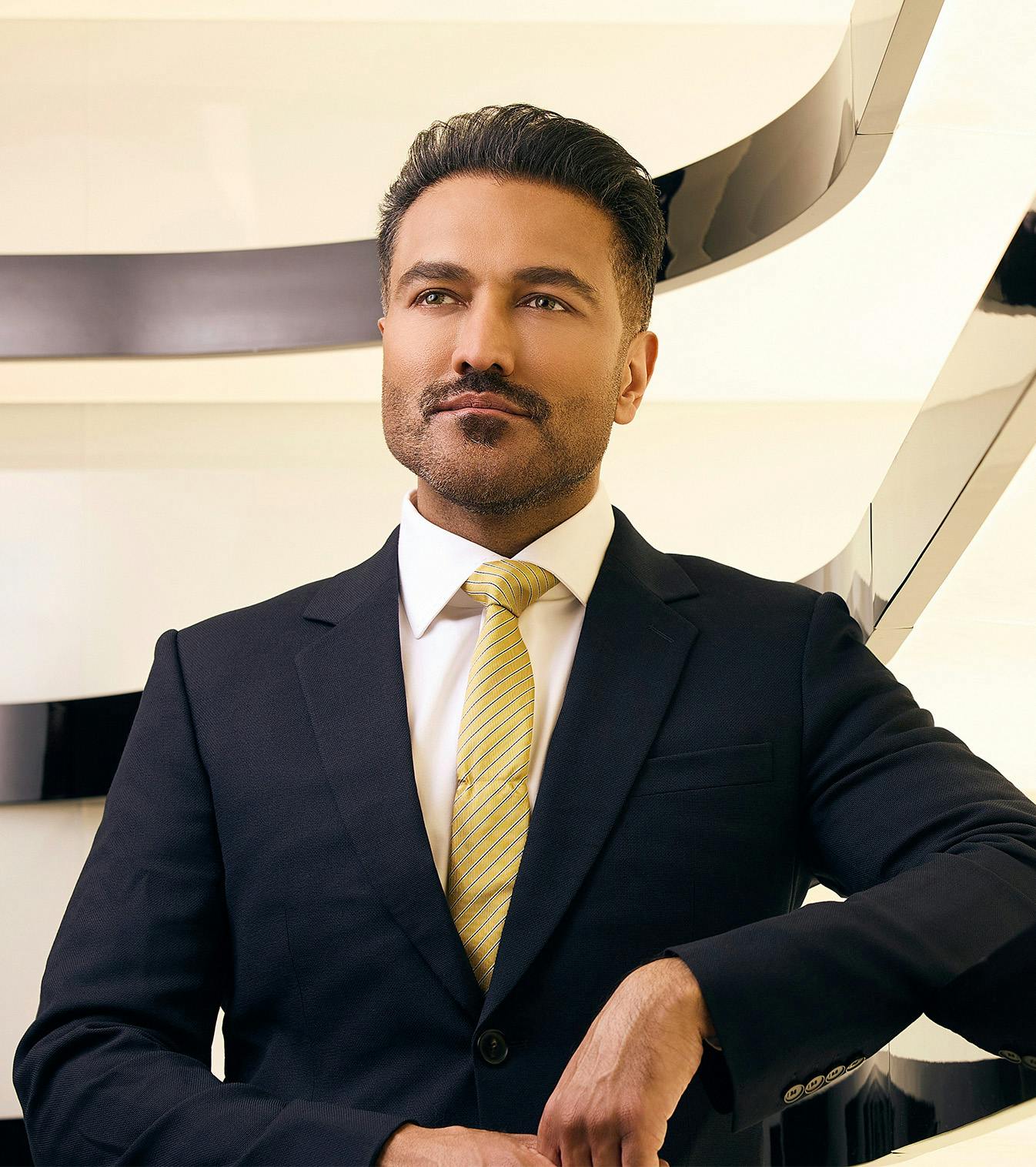
Hairline design is where the distinction between physician-led care and technician-performed work becomes most visible. An unnaturally straight, overly dense, or age-inappropriate hairline is the hallmark of a procedure that was executed without sufficient artistry and clinical oversight. At the Canadian Hair Transplant Centre, Dr. Sharma personally designs and executes every hairline transplant, from the initial design through to the final graft placement. Dr. Sharma holds an MD and MB ChB from the University of Glasgow, is registered with the College of Physicians and Surgeons of Alberta (CPSA ), and is an active member of the International Society of Hair Restoration Surgery (ISHRS). Licensed to practise in Alberta, England, and Scotland, he brings over 15 years of specialized hair restoration experience to procedure, supported by advanced training across the United Kingdom, Italy, and France. Our clinic operates as CPSA-approved Non-Hospital Surgical Facility.

Doctor background

What to Expect From Your Hairline Transplant in Edmonton

Hairline Design and Facial Landmark Assessment

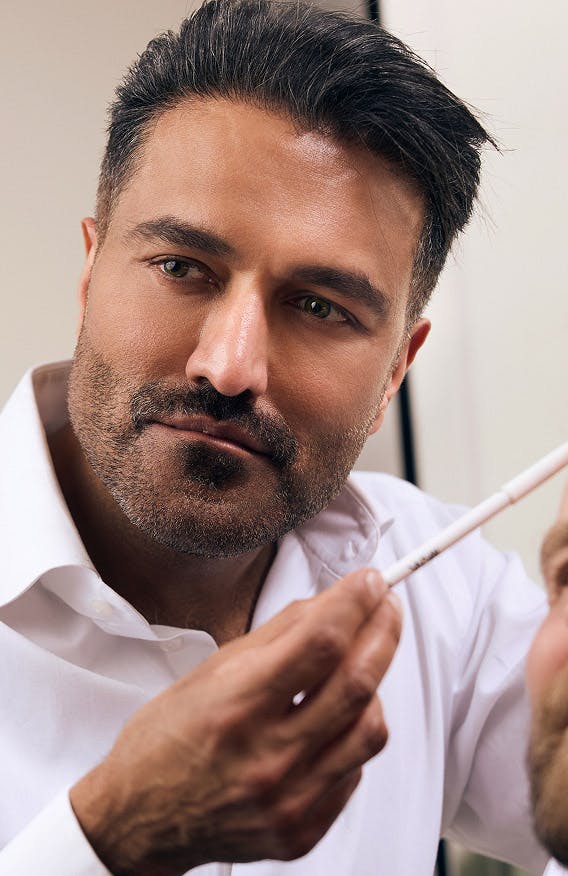
To begin your hair restoration journey, you’ll join Dr. Sharma for an unhurried, one-on-one consultation. There, he’ll assess your age, the current stage of your hair loss using the Norwood-Hamilton classification, and the projected trajectory of future recession to design your hairline, using anatomical landmarks to create a harmonious result. By incorporating micro-irregularity along the leading edge and a soft transition zone of finer single-hair grafts, he’ll craft a natural-looking outcome that remains stable over time.

TrichoScan Assessment and Donor Planning

Dr. Sharma will use advanced TrichoScan imaging to map your donor density and assess your lifetime graft availability before allocating any follicles to the hairline zone. Because the hairline competes with the mid-scalp, crown, and potential future recession zones for a finite donor supply, careful planning at this stage is essential. The following information will be gathered to inform your individualised surgical plan:

  • Follicular density across the entire donor zone, including the occipital and parietal regions
  • Hair calibre, curl, and shaft diameter 
  • Lifetime graft availability
  • Existing hair in the recipient zone that must be preserved and incorporated into the design

Maintaining Graft Integrity 

During surgery, Dr. Sharma will manually extract all follicles using 0.6 to 0.7 mm punches under surgical magnification, with no motorised or robotic devices used at any time. Extracted grafts will be immediately transferred to a HypoThermosol and ATP solution at 2-4℃ using a first-in, first-out system to preserve graft integrity. Every graft will undergo stereomicroscopic inspection before being approved for implantation, with Dr. Sharma applying the following criteria to every follicle:

  • Single-hair follicular units will be selected for the leading edge of the hairline transition zone
  • Fine-calibre grafts will be prioritised for the outermost row to avoid a pluggy or artificially dense perimeter
  • Double and multi-hair units will be reserved for the denser zone immediately behind the hairline
  • Damaged or structurally compromised grafts will be excluded from placement

Recipient Site Creation and Graft Placement

Once all follicles have been extracted, Dr. Sharma will create all recipient sites using custom blades sized to match each individual graft. He’ll make test incisions to confirm the correct blade size and depth before the full transplantation proceeds. Because the hairline is a highly visible zone, every incision angle will be precisely matched to the natural exit angle of surrounding hair, typically very acute and forward-facing along the leading edge. Here, our follicle placement uses the following strategy:

  • The outermost row will receive the finest single-hair grafts placed at the lowest possible emergence angle to craft a soft, natural leading edge
  • Subsequent rows will progressively increase in graft size and density, creating a graduated transition from sparse to full
  • Temporal angles will be designed to reflect natural recession patterns appropriate to the patient's age and long-term hair loss trajectory
  • All grafts will be hand-placed under magnification, with hair direction and curl matched to the surrounding native growth

Schedule A Consultation

Patient-First Recovery

Recovery after a hairline transplant in Edmonton typically involves mild swelling across the frontal scalp and forehead in the first two to three days, along with dot-like scabbing and tenderness at the recipient sites that should resolve within two weeks. Because swelling from the frontal zone can migrate downward toward the eyes, we recommend resting with your head elevated for the first few days of your recovery. We’ll provide you with a hydration spray to support your healing and protect the newly placed grafts during the critical adherence window. Most patients return to non-physical work, social gatherings, and light movement within three to five days. Strenuous activity and anything that raises blood pressure in the head and face should be avoided for at least one week to prevent sweating and scalp irritation.

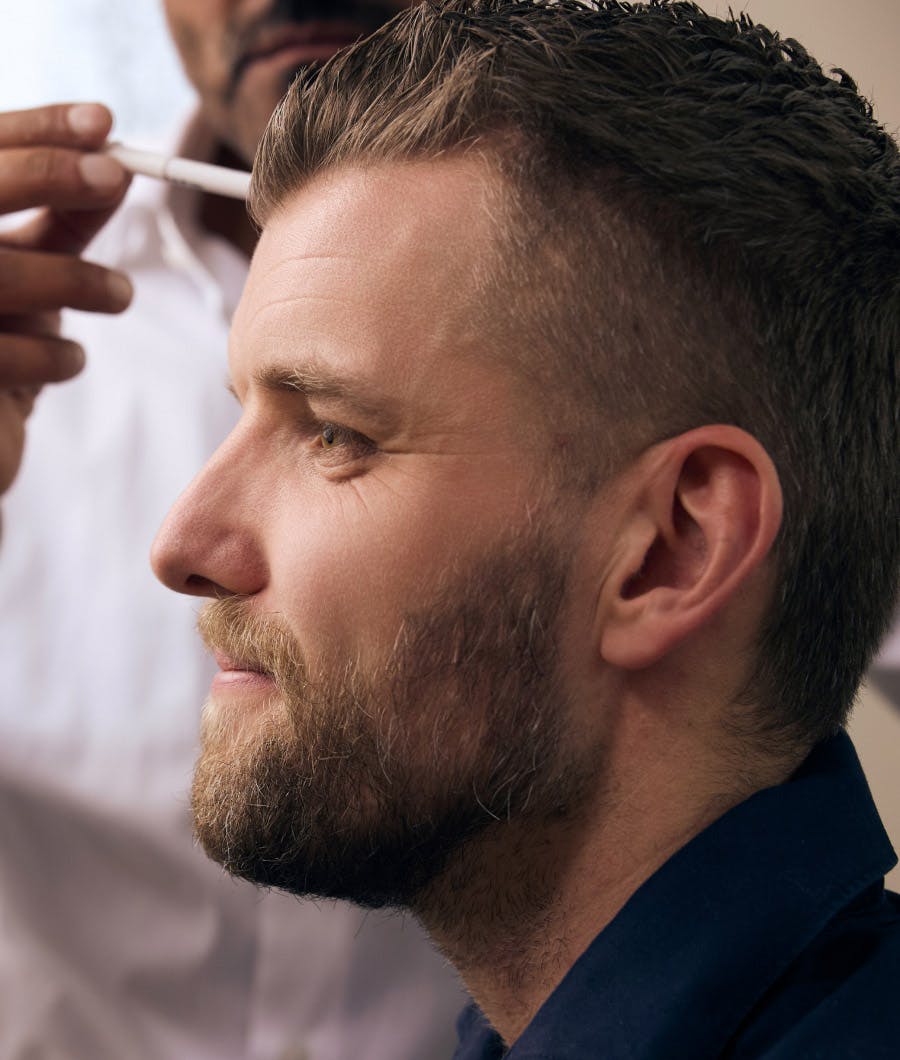
A man with his head turned to the side

Your Post-Op Process

After your procedure, our team of trained technicians and nurses will share a customised recovery plan tailored to your unique needs. Your plan may include guidance on the following:

  • Incision site care and cleaning protocols
  • Sun protection and exposure requirements
  • Scalp care guidelines
  • Hygiene and hair styling recommendations
  • Activity limitations
  • Side effects to monitor
  • Swelling and pain management strategies

Over the coming months, you’ll return to our practices for short follow-up appointments with Dr. Sharma. There, he’ll check your healing progress, assess graft health, and review any additional thinning or recession in the surrounding area.

Natural-Looking Results

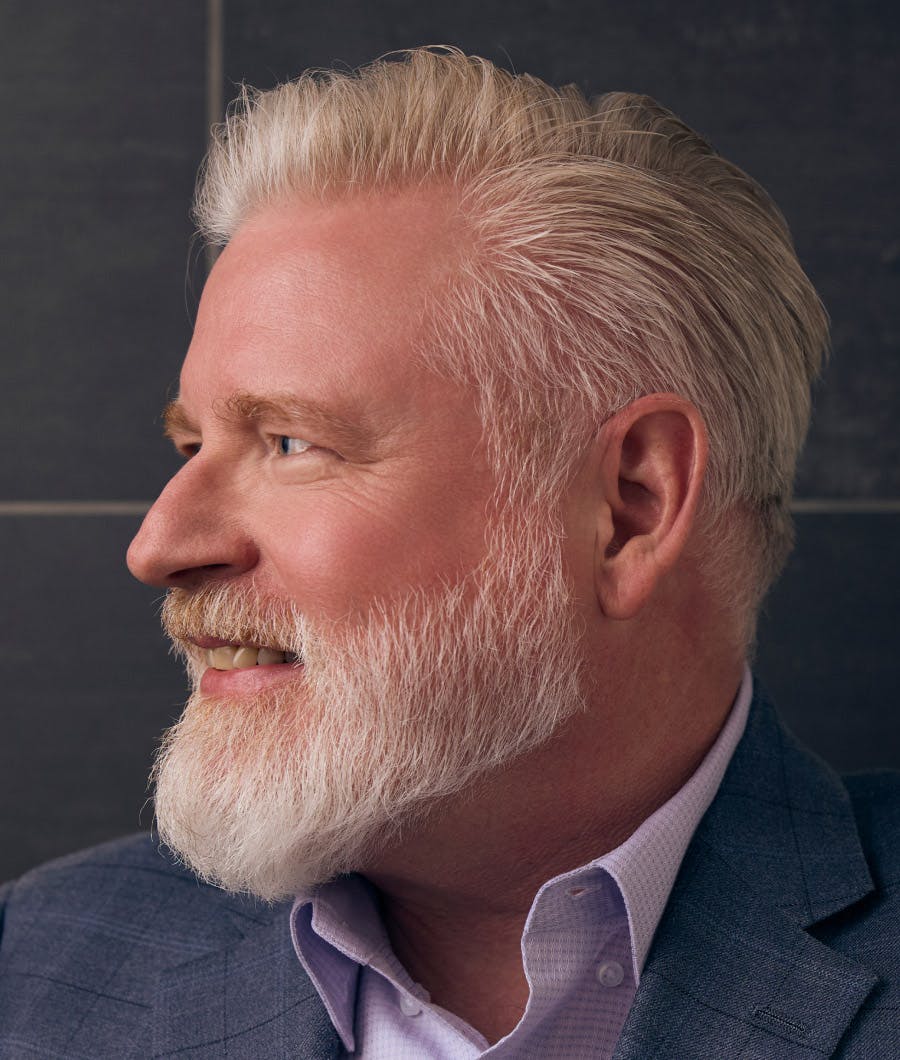
The final results of your hairline transplant may take up to 18 months to take shape. Shedding the transplanted hairs is a normal part of early recovery, and you should notice initial growth within three months, though it may be patchy. Full density, hair texture, and the complete integration of the hairline with surrounding native hair reach maturity 12-18 months post-procedure.

A man's side profile

Hair Line Transplant Frequently Asked Questions

How does Dr. Sharma decide where to place the new hairline?

Hairline position is determined using fixed anatomical landmarks, including the nasal base and glabellar midpoint, alongside an assessment of your age, facial proportions, and projected future hair loss. The goal is a design that looks natural both now and in 10-20 years, as the surrounding hair continues to change.

Can a hairline transplant be performed without shaving the head?

A no-shave option is available for patients who wish to avoid shaving the recipient or donor area. This approach requires additional procedural time and is offered only when clinically appropriate. Dr. Sharma will assess your scalp and hair quality during your consultation to confirm your candidacy.

What is the transition zone, and why does it matter?

The transition zone is the soft, graduated band of finer single-hair grafts placed along the outermost edge of the hairline before denser coverage begins. Without it, a hairline can appear abrupt and artificial. Dr. Sharma designs every hairline with a well-defined transition zone as a key element of the aesthetic plan.

Will I need additional procedures as my hair continues to recede behind the transplanted hairline?

Yes, depending on the rate of your natural progression. Dr. Sharma plans every hairline restoration with future recession in mind, conserving enough donor supply to address additional areas if needed. Medical hair loss therapies can also help slow progression in non-transplanted zones.

Schedule Your Surgical Consultation

Hair transplant surgery requires careful evaluation and planning. Schedule a consultation to determine if you are a candidate for FUE or FUT procedures. The assessment includes donor evaluation, recipient area analysis, and discussion of realistic outcomes based on your individual characteristics. For medical therapy options, consult with your primary physician or dermatologist.

Contact us media Contact us media
Accessibility: If you are vision-impaired or have some other disability covered by the Accessible Canada Act, provincial accessibility or human rights legislation, or a similar law, and you wish to discuss potential accommodations related to using this website, please contact our Accessibility Manager at (780) 476-7970.
Book Consultation