Creating a Smooth, Consistent Scar

Every hair transplant involves some degree of scarring, and our team is dedicated to full transparency regarding your post-op look. The visibility of your scar will vary from patient to patient, and that depends entirely on technique, instrumentation, and the physician's precision. At the Canadian Hair Transplant Centre, minimising scar visibility in Edmonton is a core part of every surgical plan.

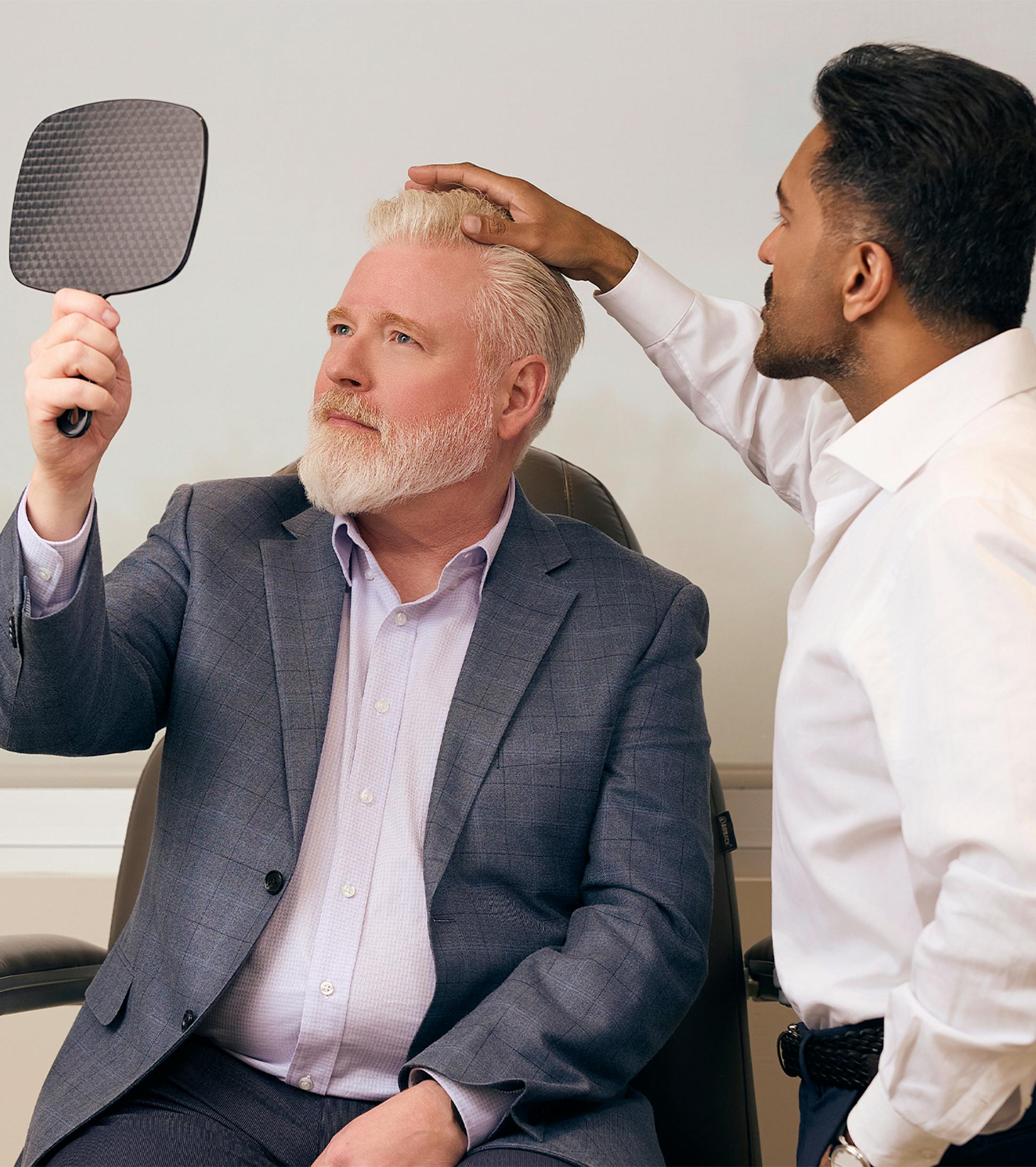
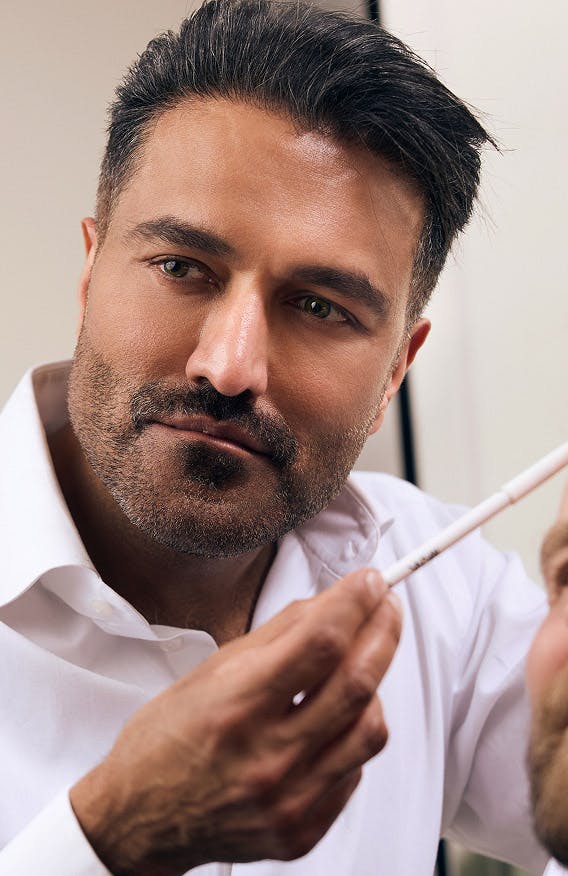
doctor showing a patient his results

What Are Hair Transplant Scars?

Hair transplant scars are the small areas of healed tissue left behind at the donor site following graft extraction. Their appearance depends on the technique used: FUE produces multiple small, dispersed dot scars across the donor area, while FUT leaves a single linear scar at the back of the scalp. Neither method is scar-free, but in experienced hands, both can produce scarring that is difficult to detect under normal hair lengths and styles.


Doctor media

Why Choose the Canadian Hair Transplant Centre?

Scar outcomes in hair transplantation are directly tied to the precision of the physician performing the work. The critical steps of every procedure are performed by Dr. Sharma, including recipient site creation, angle determination and aesthetic design. Implantation is performed by our specialist team. Dr. Sharma uses strategic layered suturing techniques in FUT cases to minimise wound tension and limit scar widening over time, tailoring his approach to your needs. Dr. Sharma earned his MD and MB ChB at the University of Glasgow, is registered with the College of Physicians and Surgeons of Alberta (CPSA), and is an active member of the International Society of Hair Restoration Surgery (ISHRS). Our clinic operates as CPSA-approved Non-Hospital Surgical Facilities, with sterilisation protocols and facility management standards that support optimal healing conditions from start to finish.

Doctor background

Understanding Your Hair Transplant Scar

Scarring From FUE Hair Transplants

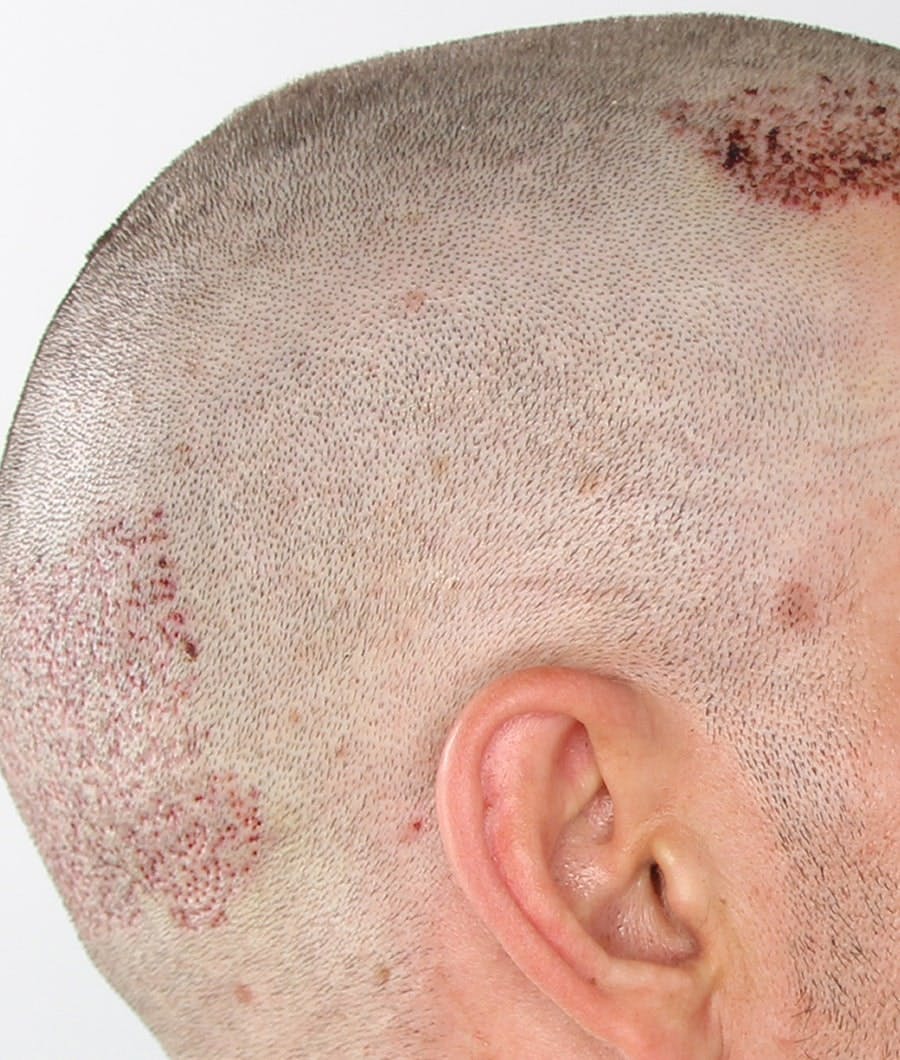
FUE extraction leaves small, circular healing sites distributed across the donor area. Each site heals as a faint white dot measuring up to 1mm in diameter. Because these sites are spread across a broad surface area rather than concentrated in a single location, they’re difficult to detect with the naked eye once healed, making this an ideal procedure for patients who prefer shorter hairstyles (1-2 guard clipper lengths). FUE scars typically present with the following characteristics:

  • No sutures are required, as each extraction site heals independently
  • Dot scars begin as small red marks and gradually fade to white over several weeks
  • The rate of fading varies based on individual skin tone, with lighter skin tones typically taking longer to fully fade
  • Scarring is present but rarely visible to others under normal hairstyle lengths

Scarring From FUT Hair Transplants

FUT produces a single linear scar at the back of the scalp, positioned low within the occipital region to sit beneath the surrounding hair, remaining well-hidden underneath longer hair. The length and width of your scar will depend on the number of grafts required and the degree of scalp laxity. Dr. Sharma closes the donor site using a layered suturing technique, placing absorbable sutures in the deeper tissue layers to reduce wound tension before completing the outer closure, limiting the risk of scar widening over time. 

Concealing Your Donor Scar During Recovery

While the donor area heals, most patients find that their existing hair provides adequate coverage in everyday settings. The following approaches are commonly used by our Edmonton patients during the weeks following their procedure:

  • Female patients with longer hair often tie their hair up or style it to cover the donor zone without placing tension on the healing skin
  • Male patients with short hair can generally return to a clipper cut once the donor area has fully healed, at which point dot scars are difficult to distinguish from the surrounding scalp
  • FUT patients may choose to delay any significant shortening of the donor area until the linear scar has matured and faded, which typically takes several months
  • Trichoscopy at your follow-up appointments will allow Dr. Sharma to assess scar maturation and provide guidance on when it’s safe to resume your preferred hairstyle

Schedule A Consultation

Contact us media

Caring for Your Hair Transplant Scars

Your scar outcome is influenced by what happens in the weeks following your procedure, not by what happens in the operating room. The donor area should not be subjected to tension, trauma, or sun exposure during the early healing phase.

Suture sites from FUT procedures should be kept clean and dry per the aftercare instructions provided by our team, and physical activity that strains the donor area should be avoided for at least one week.

Redness at both FUE and FUT donor sites is normal in the first several weeks and should gradually fade over the following months. Dr. Sharma will assess scar maturation at your follow-up appointments and advise on any additional care as needed.

Hair Transplant Scar Revision

Patients who have experienced poor scarring outcomes from a previous hair transplant at another clinic can seek revision at the Canadian Hair Transplant Centre. We address wide or raised FUT scars by surgically removing the existing scar tissue and reclosing the wound with layered suturing techniques to achieve a finer result. FUE grafts can be transplanted directly into a linear scar to promote hair growth within the scar tissue, but the viability of this approach depends on the scar's thickness and vascularity, as dense scar tissue holds grafts less reliably than healthy scalp skin. Dr. Sharma will assess the specific characteristics of your hair restoration scar during your consultation before making an informed, expert recommendation. We regularly treat patients presenting with botched or poorly executed prior procedures, and a full clinical assessment will determine what corrective options are best suited to your remaining donor supply.

Hair Transplant Scars Frequently Asked Questions

Will my FUE dot scars be visible if I shave my head completely?

At a full shave, FUE dot scars may become faintly visible as small white marks. At a clipper guard length of one or two, they’re generally difficult to distinguish from the surrounding skin. Dr. Sharma will discuss realistic expectations for scar visibility at your hairstyle preference during your initial consultation.

How long does it take for hair transplant scars to fully mature?

FUE dot scars typically fade from red to white within a few weeks. FUT linear scars take longer to mature, with the most improvement occurring within the first six months, though continued refinement is possible for up to a year following the procedure. Individual healing timelines vary, and Dr. Sharma will provide a realistic timeline during your consultation.

Can FUE grafts be placed into an existing FUT scar from a prior clinic?

Yes. However, graft survival in scar tissue depends on the depth, age, and vascularity of the scar. Dr. Sharma will directly assess the scar during your consultation before confirming whether this approach is clinically appropriate for your situation.

Does tighter suturing produce a finer scar after FUT?

No. Sutures that are too tight increase wound tension, which can widen the scar over time rather than reduce it. Dr. Sharma uses a layered closure technique specifically to keep the outer layer tension-free, which supports finer, more consistent scar healing.

Schedule Your Surgical Consultation

Hair transplant surgery requires careful evaluation and planning. Schedule a consultation to determine if you are a candidate for FUE or FUT procedures. The assessment includes donor evaluation, recipient area analysis, and discussion of realistic outcomes based on your individual characteristics. For medical therapy options, consult with your primary physician or dermatologist.

Contact us media Contact us media
Accessibility: If you are vision-impaired or have some other disability covered by the Accessible Canada Act, provincial accessibility or human rights legislation, or a similar law, and you wish to discuss potential accommodations related to using this website, please contact our Accessibility Manager at (780) 476-7970.
Book Consultation