Preserving Your Femininity While Dealing With Hair Loss 

Female hair loss rarely looks like the textbook male pattern, and treating it as though it does leads to disappointing results. At the Canadian Hair Transplant Centre, hair loss treatment for women in Edmonton begins by recognising that diffuse thinning requires a fundamentally different clinical approach than male recession-pattern loss.

woman leaning against a wall

What Is Female Hair Loss?

Female hair loss most often presents as diffuse thinning across the crown and central scalp rather than the defined hairline recession typical in men. Causes include androgenetic alopecia, hormonal shifts related to menopause, pregnancy, or PCOS, thyroid dysfunction, and autoimmune conditions such as alopecia areata. Because the donor area is usually preserved, many women are strong candidates for both regenerative therapy and surgical restoration.


“One year in, and I couldn’t be happier with the results that Dr. Sharma and his team have given me.”
–N.X.
“I'm just under 1 year post surgery and I'm so happy with my results so far.”
–C.B.
“Dr. Sharma is outstanding—truly the best in his field.”
–A.B.
“I recently had a 4000 graft hair transplant surgery over two days, and it was an incredible experience from start to finish.”
–F.K.
“If you're considering this procedure, put Dr. Sharma and his team on your short list of clinics.”
–R.D.

Available Hair Loss Treatments for Women in Edmonton

Surgical Hair Restoration

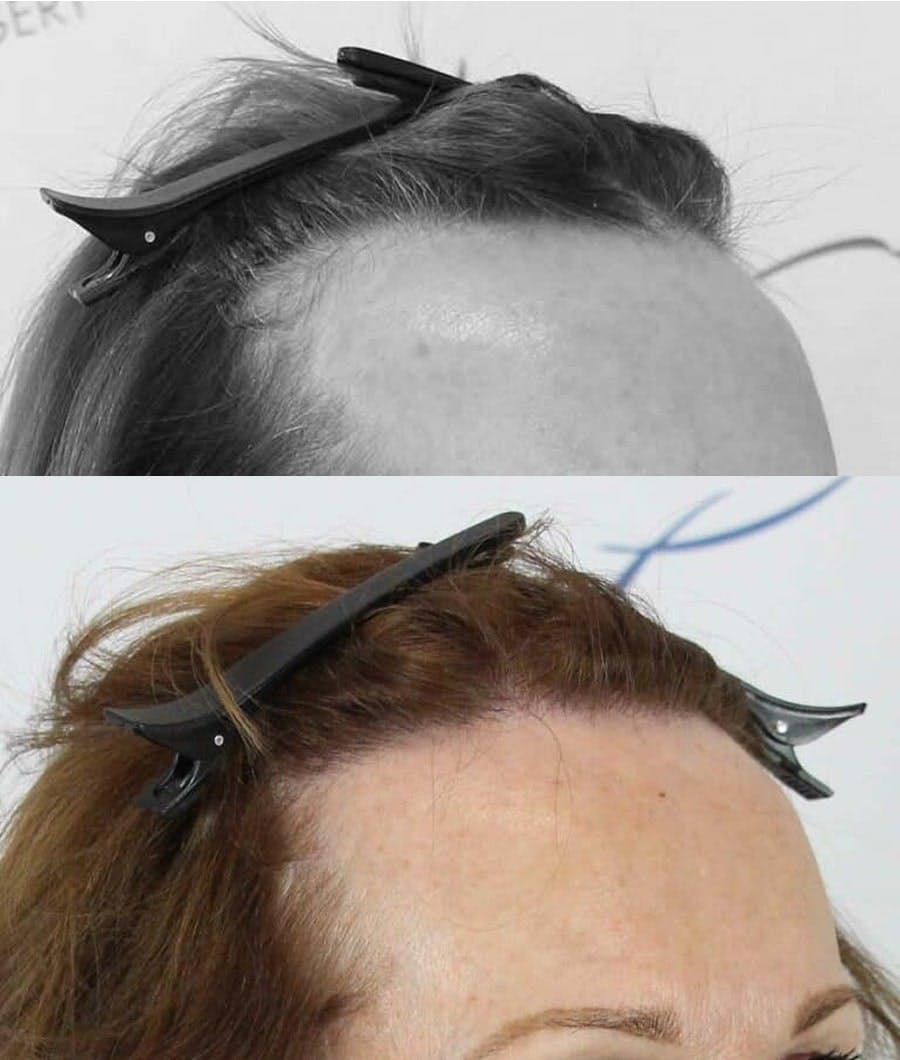
Hair transplants for women in Edmonton are planned differently than male procedures, with emphasis on diffuse coverage rather than recreating a receded hairline. No-shave FUE techniques allow many female patients to maintain their existing hairstyle throughout recovery, and a softer, more rounded hairline design accentuates their natural, feminine facial structure.

Platelet-Rich Plasma (PRP) Therapy

PRP therapy is frequently the first-line regenerative treatment for women experiencing early diffuse thinning, particularly when hormonal factors are involved. The treatment is well-suited to female pattern loss because it supports follicle activity across broad areas of the scalp rather than targeting an isolated bald patch.

Exosome Therapy

Exosome therapy complements PRP by delivering cell-signalling molecules that support follicle health across thinning zones. For women, this therapy is often used to address the gradual, scalp-wide nature of female pattern loss, helping extend the active growth phase of existing hair.

Low-Level Laser Therapy (LLLT)

Low-Level Laser Therapy is a non-invasive option that’s ideal for women who prefer to avoid injectable treatments in the early stages of thinning. Because female hair loss tends to be diffuse, the broad scalp coverage offered by laser therapy devices aligns well with the goal of supporting circulation and follicle activity across the entire treatment area.

Microneedling

Microneedling, which we perform with topical finasteride, enhances the absorption of prescription-strength treatments throughout the scalp, making it particularly useful for women managing widespread thinning. This approach is often combined with other regenerative therapies to support a more comprehensive, scalp-wide maintenance strategy.

Medical Hair Loss Therapies

Medical hair loss therapies for women differ meaningfully from those prescribed to men, and they are available through our Nurse Practitioner at our clinic. Here, we focus on the following medications: 

Because hormonal status plays such a significant role in female pattern loss, we evaluate thyroid function and other contributing factors before finalising your prescription plan.

Doctor media

The Canadian Hair Transplant Centre Difference

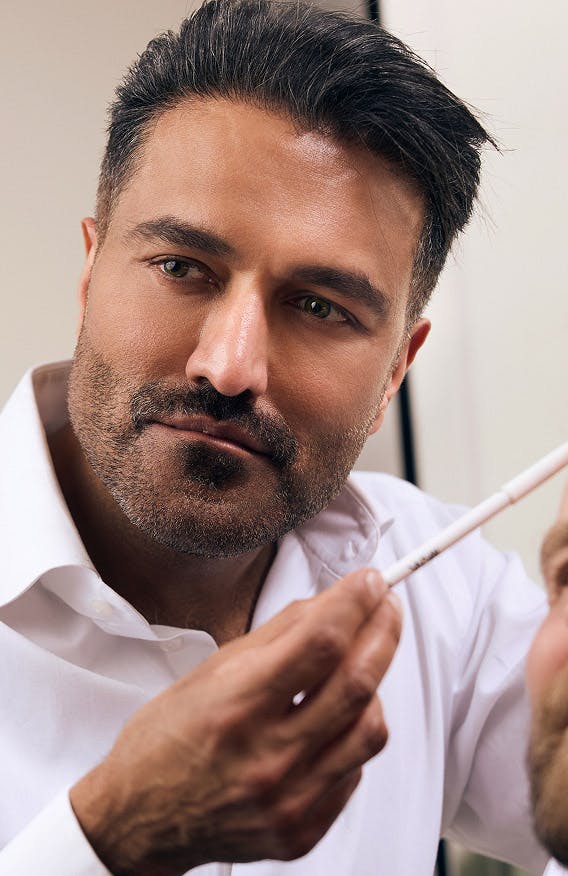
You deserve a physician who treats female pattern loss as a distinct clinical category rather than a smaller version of male restoration. The critical steps of every procedure are performed by Dr. Sharma, including recipient site creation, angle determination and aesthetic design. Implantation is performed by our specialist team. Dr. Sharma holds an MD and MB ChB from the University of Glasgow, is registered with the College of Physicians and Surgeons of Alberta, and is an active member of the International Society of Hair Restoration Surgery (ISHRS). He’s performed more than 1,000 successful hair restoration procedures during his 15+ years in the field. 

Doctor background

Figuring Out Your Ideal Treatment

The right combination of treatments depends on the pattern, stage, and underlying cause of your hair loss, as well as your personal goals and donor density. A clinical consultation, including TrichoScan imaging and a review of relevant hormonal factors, is the most reliable way to determine which path forward will serve you best. During your one-on-one consultation with Dr. Sharma, you’ll discuss your hair history and aesthetic goals, and he’ll assess your scalp, loss pattern, and hormonal testing to identify your optimal treatment strategy. 

Hair Loss Treatment for Women Frequently Asked Questions

Can hormonal hair loss in women be reversed with treatment?

In many cases, addressing the underlying hormonal cause alongside topical or regenerative therapy can meaningfully slow or stabilise hair loss. Full reversal depends on the extent of follicular miniaturisation already present. During your consultation, Dr. Sharma will walk you through realistic improvements for your unique scalp and hair loss.

Is hair transplant surgery still effective for diffuse thinning rather than a bald patch?

Yes, as long as you have adequate donor density and your loss pattern is stable. Surgical planning for diffuse female thinning focuses on distributing grafts to maximise the appearance of overall density rather than filling in a single defined area.

Should I see a doctor before starting any hair loss treatment?

Yes. Female hair loss can be linked to thyroid dysfunction, PCOS, nutritional deficiencies, or other medical conditions that should be identified before starting treatment. We recommend a medical evaluation with your family physician or a dermatologist if you have not already had one for your hair loss.

Can I use medical hair loss therapies if I am still having periods or trying to conceive?

Certain medications, including oral finasteride, are not appropriate for women who are pregnant or may become pregnant. Your treatment plan will be reviewed carefully with this in mind, and our Nurse Practitioner will discuss which options are suitable based on your reproductive health status.

Schedule Your Surgical Consultation

Hair transplant surgery requires careful evaluation and planning. Schedule a consultation to determine if you are a candidate for FUE or FUT procedures. The assessment includes donor evaluation, recipient area analysis, and discussion of realistic outcomes based on your individual characteristics. For medical therapy options, consult with your primary physician or dermatologist.

Contact us media Contact us media
Accessibility: If you are vision-impaired or have some other disability covered by the Accessible Canada Act, provincial accessibility or human rights legislation, or a similar law, and you wish to discuss potential accommodations related to using this website, please contact our Accessibility Manager at (780) 476-7970.
Book Consultation